
Instagram can be a powerful tool for growing a graphic design business.
But simply posting your work and hoping the right client discovers it is usually not enough.
A designer can have a beautiful feed, hundreds of polished portfolio pieces, and even a large following without generating consistent client inquiries.
Why?
Because there is a major difference between creating content that other designers enjoy and creating content that attracts people who may actually hire you.
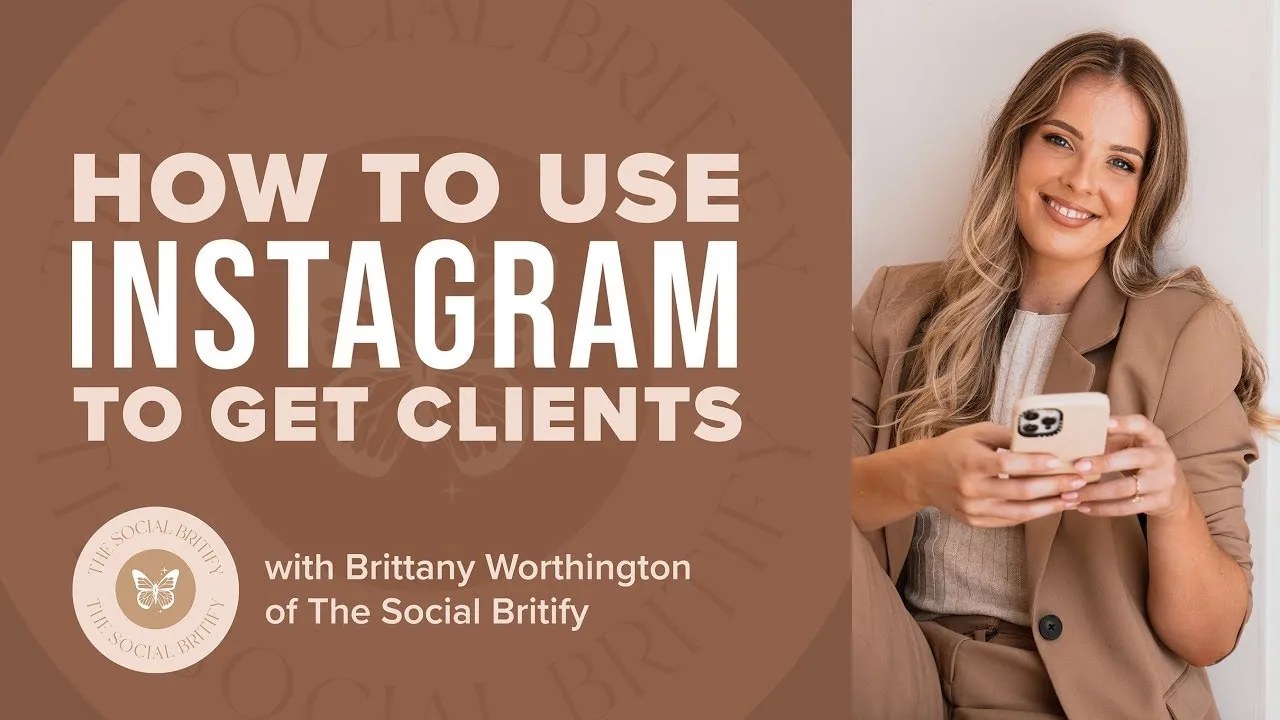
This article is based on a conversation from the Earning by Design podcast with Instagram strategist Brittany Worthington, who shared her experience building businesses through social media and helping entrepreneurs use Instagram more strategically. Her central message for designers is simple: Instagram works best when it is treated as part of a larger business strategy, not as a popularity contest.
If your goal is to use Instagram to get graphic design clients, the first question should not be: "What should I post today?"
The better question is: "Who am I trying to reach, what problem do they have, and how can my content show them that I can help?"
That shift changes everything.
Why Posting Your Design Work Is Not Enough
One of the most common approaches graphic designers take on Instagram is also one of the most limiting.
They post their work. Logo. Brand identity. Packaging. Website. Poster. Illustration. Another logo. Another mockup.
There is absolutely nothing wrong with showcasing your portfolio. Potential clients need to see evidence of your abilities.
The problem happens when your entire Instagram strategy becomes: look at this thing I designed.
Who is most likely to engage with beautiful design work? Other designers. Illustrators. Creative directors. Students. People who enjoy design.
That engagement may feel encouraging, but if your business depends on attracting restaurant owners, startup founders, real estate companies, coaches, manufacturers, or other businesses, then attracting only designers will not necessarily help you generate work.
Your content needs to speak directly to the people who may buy your services.
If you want to attract business owners, talk about business problems. If you want branding clients, talk about branding problems. If you design websites, explain the problems that cause websites to lose customers.
Your work can still be the visual centerpiece. But the conversation surrounding that work needs to change.
Start With Your Ideal Client, Not the Algorithm
Before trying to "beat the Instagram algorithm," understand who you want the algorithm to find.
This sounds obvious, but many freelance designers skip it. They start posting before defining who they want to work with, what services they want to sell, what problems those services solve, why those problems matter to the client, and what type of businesses are most likely to need their help.
Then they wonder why their Instagram content feels directionless.
Brittany recommends ongoing market research as one of the most valuable things a business owner can do. Not once. Repeatedly.
Talk to people who resemble your ideal client. Ask questions. What frustrates them about their current branding? What makes hiring a designer intimidating? What are they trying to accomplish? What would make them invest in professional design? What language do they use when describing the problem?
That last question is especially important.
Designers tend to speak like designers. Clients usually do not.
You might describe a project as: "Creating a cohesive visual identity system that strategically communicates brand positioning."
The client may simply say: "Our business looks inconsistent and nobody recognizes us."
The client's language is often better marketing language because it reflects what potential buyers are already thinking.
Turn Market Research Into Instagram Content
Once you understand your ideal client's frustrations, questions, and goals, content becomes much easier to create.
Imagine you are a brand designer and your research reveals that business owners frequently say:
- "Our logo looks outdated."
- "Everything we create looks different."
- "We don't look as professional as our competitors."
- "I don't know when it's worth paying for professional branding."
- "I have a logo, but I don't know what to do with it."
Those are five Instagram posts already. You could create:
- 5 Signs Your Business Has Outgrown Its Logo
- Why Your Brand Looks Different Everywhere
- Professional Branding vs. DIY Branding: What's the Difference?
- When Should a Small Business Invest in Brand Design?
- A Logo Is Not a Brand: What You Actually Need
This is much more strategic than sitting down every Tuesday thinking, "What should I post?"
The content comes directly from your market.
And once you start publishing, Instagram gives you another layer of research. Which subjects receive saves? Which posts generate profile visits? Which ones bring inquiries? Which attract other designers but no potential clients?
You adjust based on what you learn. Marketing becomes an ongoing experiment.
Optimize Your Instagram Profile for Clients
Before worrying about posting every day, make sure your Instagram profile clearly communicates what you do.
Someone who discovers your account should be able to understand your business quickly. They should not need to scroll through twenty posts to determine whether you might be able to help them.
A strong Instagram profile for a freelance graphic designer should answer three questions: who do you help? What do you help them with? What should they do next?
For example, instead of a bio that says: Designer | Creative | Coffee Lover | Making Cool Things
You might say something closer to: Brand identity designer helping growing food and beverage brands look established and recognizable.
Then provide an obvious next step. Book a consultation. View your portfolio. Download a resource. See your services. Send an inquiry.
Clarity is more useful than cleverness.
Use Instagram SEO to Help Potential Clients Find You
Instagram is also a search platform. That means some of the information in your profile should contain words your potential clients might actually search.
Your name field, the bold text at the top of your profile, is particularly important. If your business name does not clearly explain what you do, consider including a descriptive keyword.
For example: Jane Smith | Brand Designer or Studio North | Packaging Design rather than simply Studio North.
You need to think from the customer's perspective. What would someone type into Instagram if they needed your service? Graphic designer? Brand designer? Logo designer? Packaging designer? Web designer? Brand strategist?
The answer depends on your target market.
Sometimes clients do not know the professional term for what they need. They know the problem. That means your content needs to address both.
Treat Your Business Instagram Like a Business Account
One particularly interesting point from Brittany's strategy is that your own behavior on Instagram may influence the content and connections the platform associates with your account.
Many new business owners create an Instagram page and immediately follow friends, family, celebrities, favorite chefs, personal interests, and other designers.
None of those things are inherently bad. But if your goal is to build a professional ecosystem around your graphic design business, start behaving like the business you want the platform to understand.
Follow relevant industries. Interact with businesses you genuinely want to understand. Follow organizations, founders, publications, and potential partners connected to your niche.
If you run a restaurant branding studio, your professional account should probably spend more time around restaurant owners, hospitality businesses, food publications, packaging brands, and entrepreneurs than celebrity gossip accounts.
Your personal Instagram can be personal. Your business account should have a purpose.
Stop Creating Content for Other Graphic Designers
This is one of the most important principles in this entire strategy.
Graphic designers naturally attract graphic designers. We like seeing beautiful work. We understand design terminology. We appreciate typography. We notice a clever logo.
So when you create a highly technical post about kerning, designers may love it. But will the owner of a construction company who needs a new brand identity care? Maybe not.
This does not mean educational content is bad. It means the education should be designed for the customer.
Instead of 5 Advanced Typography Rules for Better Logo Design, try Why Your Company's Logo May Look Unprofessional Even If You Can't Explain Why.
The designer sees typography. The client sees professionalism.
Your job is to translate your expertise into something the buyer cares about.
Educate Clients on the Value of Professional Design
Many potential clients do not understand what professional graphic design actually changes for their business. That is a content opportunity.
Do not assume people already understand why branding matters. Explain it.
Show why consistent visual identity can improve recognition. Explain why professional packaging can change perceived value. Show how confusing website design affects customer experience. Discuss what happens when a business grows while its branding remains stuck in the startup stage.
Talk about the difference between something that simply looks attractive and something intentionally designed for a specific audience.
The goal is not to constantly say hire me. The goal is to help potential clients understand why the problem you solve matters.
Once they understand the value of the solution, investing in the solution becomes easier.
Turn Portfolio Posts Into Case Studies
You should absolutely continue posting your design work. Just change how you present it.
Instead of: New logo design for Green Oak Coffee. Loved working on this one!
Tell the story. What was happening before the project? What problem was the client experiencing? What were they trying to achieve? What did their old branding communicate? What needed to change? What strategy did you develop? Why did you make particular visual decisions? What happened afterward?
For example: Green Oak Coffee had grown from a farmers market brand into three retail locations, but its visual identity still looked like a small weekend operation. The challenge wasn't simply designing a nicer logo. The brand needed to feel established without losing the handmade personality customers already loved.
Now the potential client can see themselves in the story. That is the difference between a portfolio post and a case study.
The portfolio says: look at what I made. The case study says: look at the kind of problem I can solve.
That is far more powerful for client acquisition.
Reels Can Help New Clients Discover You
Instagram content formats serve different purposes.
If your current goal is reach and discovering new potential clients, short-form video can be particularly useful. Reels have historically been strong for reaching people who do not already follow your account because Instagram can distribute them beyond your existing audience.
For designers who dislike appearing on camera, this does not mean you need to become an influencer.
A Reel can show your screen, a design transformation, a sketch becoming a logo, before-and-after branding, packaging mockups, design process clips, typography choices, a screen recording, hands working on physical materials, or client project stages.
Text overlays and voiceovers can carry the message. The important thing is that the content communicates something relevant to potential clients.
A beautiful 10-second logo animation may get attention. A 10-second logo animation accompanied by "This business had three completely different logos across its packaging. Here's how we unified the brand" has a business story attached to it.
Use Carousels to Build Trust
If Reels are useful for discovery, carousels can be excellent for nurturing the people who already found you.
Carousels allow you to explain ideas in more depth. For a graphic designer, useful carousel topics could include:
- 5 signs your brand needs a redesign
- What you actually receive in a brand identity project
- Logo design vs. brand identity
- Why cheap branding can become expensive later
- How professional packaging affects perception
- Before and after: how we repositioned this business
- What happens during a brand strategy project
- Questions to ask before hiring a graphic designer
These posts allow potential clients to understand your thinking. That matters because clients are not only hiring your hands. They are hiring your judgment.
The more they understand how you think, the easier it becomes to trust you with their business.
Do Not Chase Followers at the Expense of Clients
Follower growth can be useful. A larger audience creates more opportunities for people to discover your work.
But follower count should not become the ultimate measurement of whether your Instagram marketing is successful.
Would you rather have 50,000 followers made primarily of designers who never hire you? Or 2,000 followers containing business owners who regularly inquire about your services?
The answer depends on the business you are building.
The problem begins when follower count becomes disconnected from the actual business goal. Followers do not fix a weak offer. Followers do not automatically create sales. Followers cannot compensate for unclear positioning. And thousands of followers who have no interest in your service are not necessarily more valuable than a smaller, highly relevant audience.
Ask better questions: are the right people following? Are potential clients visiting the website? Are people sending inquiries? Are posts generating conversations? Are people remembering the business? Is Instagram supporting the larger marketing system?
Those are more meaningful measurements.
Don't Put Your Entire Business on Instagram
Instagram should not have the responsibility of keeping your entire business alive.
Algorithms change. Reach changes. Platforms change. Your audience technically belongs to Instagram, not you.
That is why designers should think beyond one social media platform. Email marketing can help. Search engine optimization can help. Networking can help. Referrals can help. Collaborations can help. Events can help. Strategic partnerships can help. Your website can help.
Instagram is one part of the ecosystem. A very useful part. But still one part.
The strongest design businesses often develop multiple ways for clients to discover them.
Collaborations Can Be More Valuable Than Endless Engagement
Many Instagram growth strategies recommend spending hours commenting on other accounts and sending messages. That can work. But time is limited when you are also running a freelance design business.
If you have one extra hour available, consider whether you could use it to build a meaningful collaboration instead.
Partner with a copywriter. Speak with a photographer. Create content with a marketing consultant. Collaborate with a web developer. Contribute to another business's audience. Participate in an industry event. Build relationships with people who serve the same client without offering the same service.
For example, a brand designer and a product photographer may serve many of the same businesses. They are not necessarily competitors. They can refer work to one another.
That type of relationship may produce far more long-term value than leaving 50 random comments on Instagram.
Cold Outreach Can Work, But Don't Make It Spammy
Proactive outreach is not inherently bad. Especially in B2B industries, contacting relevant businesses can be useful.
The problem is the way most cold outreach is executed.
Generic messages like "Hi! I love your page! I'm a graphic designer and would love to help your business. Let me know if you need design!" feel automated because they offer no evidence that the sender understands the business.
Good outreach should be selective. Research the company. Have a real reason for contacting them. Understand whether there is actually a fit. Personalize the conversation. And do not expect every message to become a client.
You are starting relationships. Not firing hundreds of sales messages into the internet.
Your First Clients May Come From People You Already Know
It is easy to assume that a legitimate design business must attract complete strangers from the internet. That is not true.
Many successful businesses begin with existing connections. Someone you know owns a business. Someone knows a founder. Someone needs packaging. Someone's employer needs a website. Someone introduces you to someone else.
Those early projects can become case studies. The case studies become content. The content establishes credibility. The credibility attracts new people.
That creates a snowball effect.
Do not underestimate traditional networking simply because Instagram exists.
Instagram Is a Long-Term Body of Work
One post probably will not change your business. One Reel probably will not change your business. One viral moment probably will not solve every marketing problem.
Your Instagram presence becomes valuable through accumulation.
Every useful post adds another piece of evidence. Evidence that you understand branding. Evidence that you have experience. Evidence that you solve problems. Evidence that you know your market. Evidence that you can be trusted.
Over months and years, that body of work becomes substantial.
Someone may discover one Reel today, visit your profile, read three carousels, look through a case study, leave, return two months later, visit your website, and then finally inquire.
Marketing is rarely as simple as post → client. It is usually discovery → interest → familiarity → trust → need → inquiry.
Your content supports that journey.
A Simple Instagram Strategy for Graphic Designers
If Instagram currently feels overwhelming, simplify it. Start here.
Define Your Ideal Client
Know who you want to attract.
Research Their Problems
Talk to real people whenever possible.
Optimize Your Profile
Clearly communicate what you do, who you help, and what they should do next.
Use Relevant Keywords
Make it easier for people searching for your services to understand and discover your account.
Create Content for Buyers
Do not only create content other designers appreciate.
Continue Showing Your Work
But turn portfolio pieces into case studies and stories.
Use Short-Form Video for Discovery
You do not necessarily need to show your face.
Use Carousels for Education
Teach potential clients why your services matter.
Build Relationships
Collaborate with businesses and professionals connected to your target audience.
Measure Business Results
Do not evaluate everything based on follower count.
The Goal Isn't to Become Good at Instagram
This is perhaps the most important mindset shift.
You are not trying to build an Instagram business. You are trying to build a graphic design business.
Instagram is a tool. A powerful tool when used strategically, but still a tool.
Your goal is not to please an algorithm. Your goal is to connect with the right people. Help them understand what you do. Show them how your expertise can improve their business. Earn their trust. Give them an obvious next step. And eventually turn some of those relationships into clients.
Once you stop asking "How do I get more likes?" and start asking "How can I make this more useful to the kind of person I want to work with?" your entire Instagram strategy changes.
And that is when social media can start functioning as something much more valuable than a portfolio.
It becomes part of your client acquisition system.
More About Brittany
Brittany Worthington was a professional dancer for Royal Caribbean Cruise Lines before starting her business — and initially knew nothing about creating content, writing captions, or how often to show up on social media.
Three years and more than 50,000 followers later, she had turned that experience into a career as a Social Media Manager and Instagram Coach for Australian and international businesses.
Brittany works primarily with female-led service and expertise-based businesses. She aims to show that marketing yourself successfully on Instagram does not need to feel as painful as bookkeeping — focusing on practical, sustainable systems, challenging social-media myths and unnecessary "hacks," and encouraging business owners to show up authentically and confidently.
After launching her signature program, Conquer Your Content, in 2022, she went on to create Conquer Club, an accessible, accountability-focused membership designed to help more women show up, stand out, and sell with greater consistency.